DNSYE · DO NOT SCRATCH YOUR EYES
DNSYE PUBLICATION
Norwich Preview
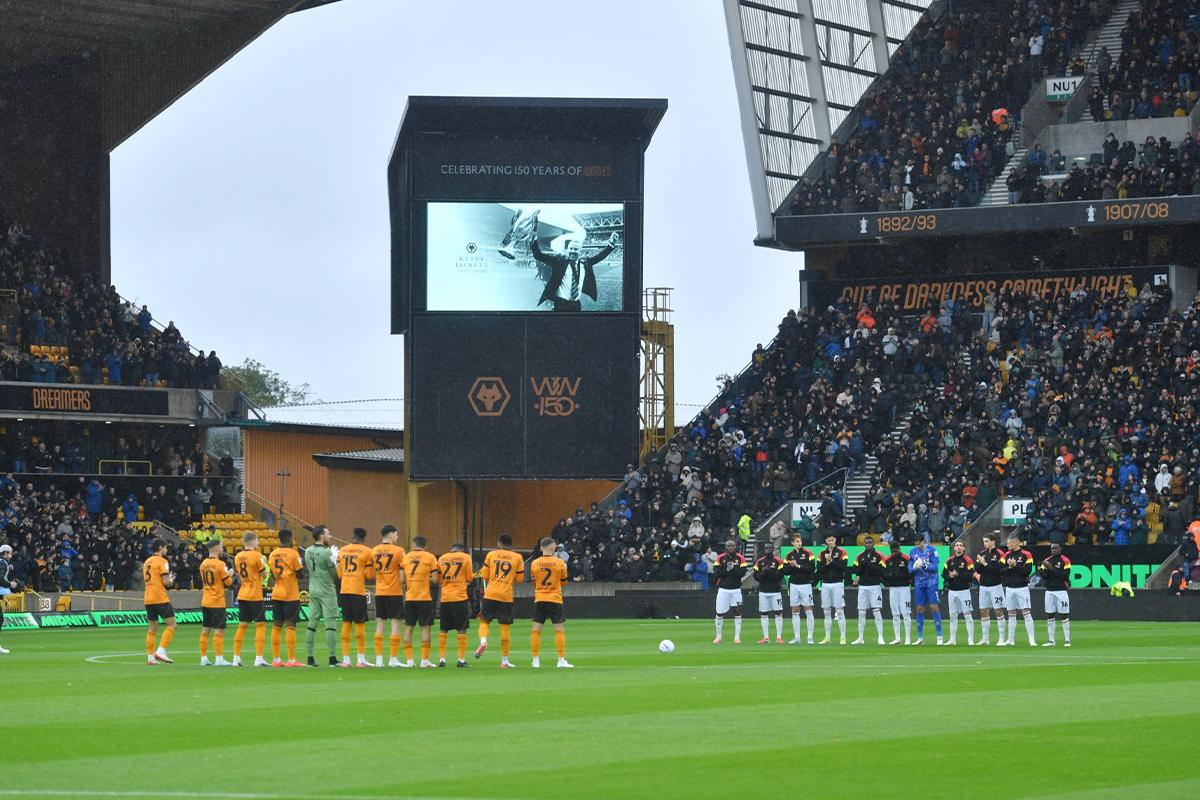
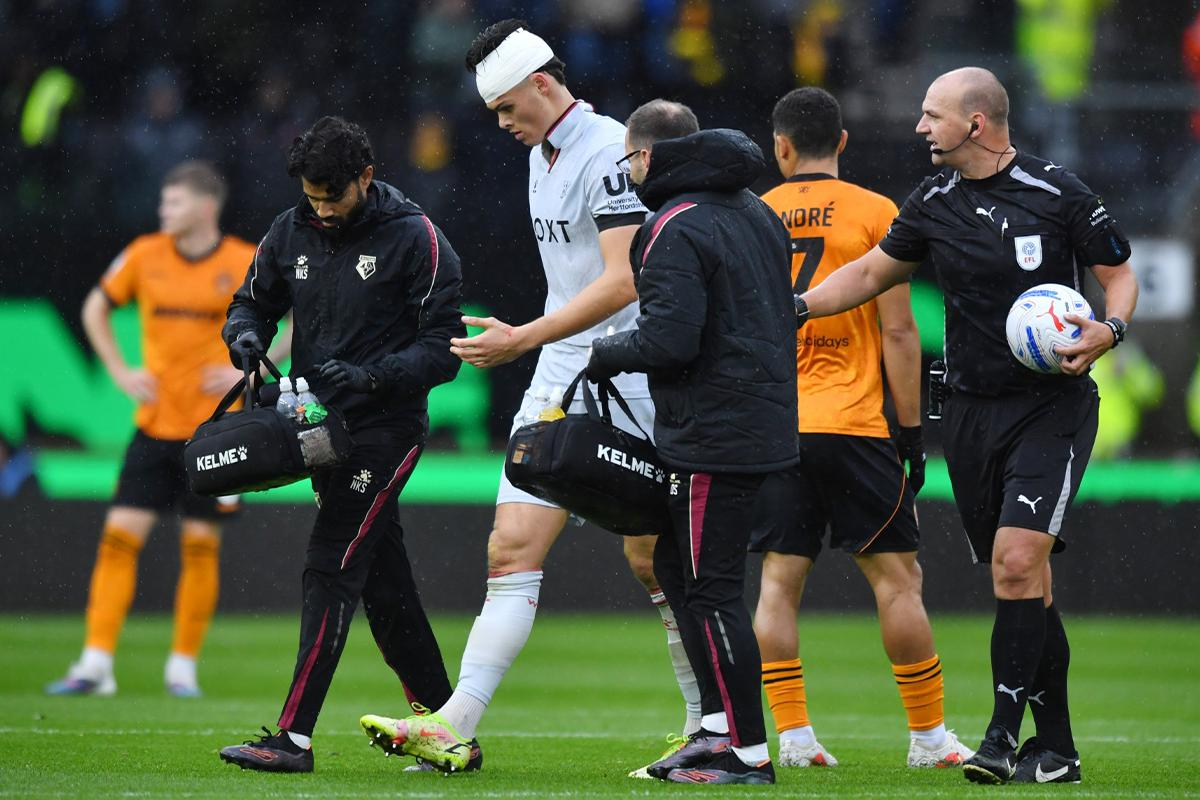
Watford's 1-0 defeat at Molineux was an afternoon when the result was not the only thing that mattered. The occasion celebrated the life of Watford legend and former Wolves manager Kenny Jackett,
Watford's 1-0 defeat at Molineux was an afternoon when the result was not the only thing that mattered. The occasion celebrated the life of Watford legend and former Wolves manager Kenny Jackett,
bringing together two clubs with a shared affection for a man who had contributed so much to both. That sense of perspective carried into the Do Not Scratch Your Eyes post-match phone-in, which began not with an argument about tactics, but with condolences to Ben and his family following the loss of his mum.
Peter sent his best wishes to Ben, Katie, Isla and the wider family before acknowledging that football can offer a welcome escape, even when it is doing its level best to make everyone miserable. "There are more important things in the world than football. However, football has never been also about keeping anything in perspective. It's the most important of all the unimportant things." That distinction would run through a programme which mixed anger at another poor performance with memories of what the club has meant to people over the years.
A Performance That Offered Little Encouragement
On the pitch, Watford had given supporters little to celebrate. Peter questioned the change in shape from the previous match, when he felt the side had operated with three at the back and Ike Bravo in a more advanced role. "Today, we were absolutely five at the back, and Bravo played on the left side of a flat three. And for me, I think that flatness was reflected in everything else that we had." Wolves deserved their interval lead, he suggested, and Watford could consider themselves fortunate that the deficit was only one.
Rich was considerably less diplomatic. He called it "the most emphatic one-nil, most easiest game", arguing that Wolves had barely been made to work for the victory. His description of Watford as "coachless" and "spineless" captured the frustration of supporters who had travelled in dreadful weather only to watch a side apparently incapable of taking the game to its opponents.
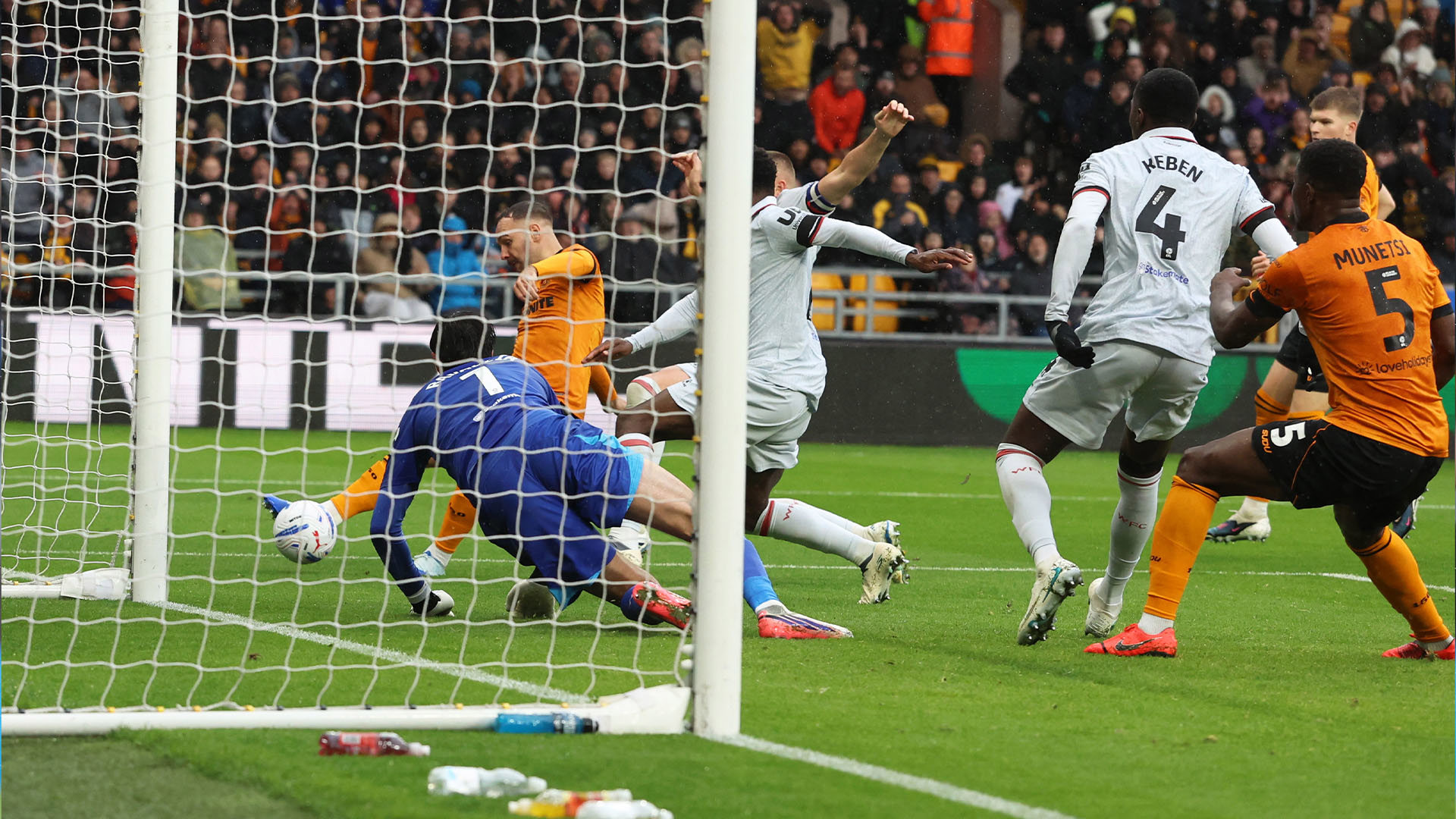
His criticism was not confined to individual errors; the bigger concern was a lack of leadership and an apparent inability to change a plan that clearly wasn't working.
Greg and Colin, speaking on their way home, found one moment worth cheering, although it was hardly a ringing endorsement of the performance. "Colin and I cheered in the first half when we got out of our own half," Greg recalled. His assessment of the midfield was similarly unforgiving: "We had no bite at all in midfield. They had the freedom of the midfield, absolute freedom of it." With Wolves moving the ball quickly and Watford struggling to retain possession, the defence was repeatedly exposed.
There was some discussion of whether the weather had contributed to the problems, but Greg was unimpressed by that explanation. "We never had the ball to hit the forwards because Wolves always had it." He and Colin felt the home side had adapted to the conditions perfectly well. Mattie Pollock earned recognition for putting himself in harm's way, even if his passing came under scrutiny, while the broader consensus was that Watford's midfield offered neither the protection nor the attacking platform the team required.
Players, Selection and the Manager
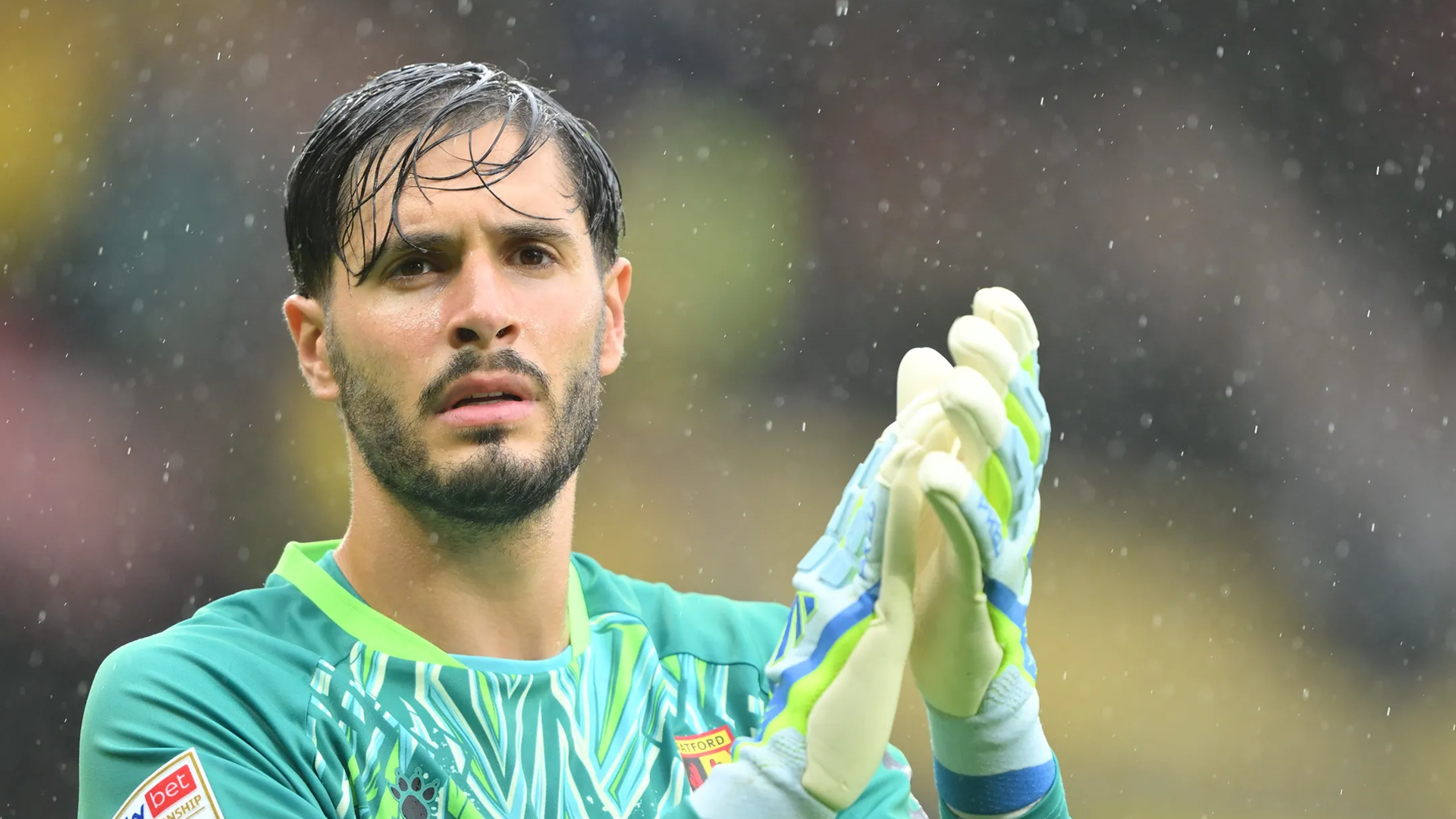
The discussion inevitably moved towards Dionisi and the possibility of yet another change in the dugout. Rich feared that replacing the manager could become a convenient distraction from questions about the club's ownership. Kaiden, however, insisted the players could not escape responsibility. "The owner is a massive issue, perhaps the biggest issue at this football club. But today you have to put some blame on those players." Federico Ravaglia was one of the few players to emerge with credit, while others attracted rather more colourful reviews.
Kaiden's criticism of Edo Kayembe led to an animated exchange about Martín Payero and what the midfield actually needed. He argued that Payero would move possession forward with greater urgency: "He is a very good progressor of the ball if he is given it. If he is given that ball, he is a great progressor. He's not gonna take 400 touches before he then gives the ball out." Peter questioned the evidence for that confidence, and the two explored whether quicker passing alone would solve Watford's problems. It was the sort of disagreement a phone-in is made for: lively, detailed and unlikely to produce a unanimous verdict.
Rich also wanted to know why Amin Nabizada was not being given more opportunities. "He's our top goalscorer. He may only have three goals, but he's scored three goals, and he's created a few as well." Peter agreed that the youngster's willingness to attack defenders might have offered something different from the bench. Questions were raised about Michail Antonio's absence too, although nobody claimed to know the full circumstances. The common theme was a sense that Watford were short of ideas when the original approach failed.
Supporters and the Ownership Debate
The football was only part of the evening's discussion. Uncle Ron reflected on the previous week's programme and the sense of sadness it had left him with about the club's direction. He was troubled by the contrast between the anger expressed online and the apparent absence of widespread protest at Vicarage Road. "There was not a peep from Watford fans, and it's so... I'm not gonna attack anyone here. We're not representative of the people in the stadium." His concern was not simply that supporters disagreed, but that the depth of dissatisfaction might not be reaching the wider fanbase.
Peter challenged the idea that a quiet crowd necessarily meant a contented one. Not everybody follows online discussions, listens to podcasts or sees the same interviews. Supporters seeking change, he suggested, needed to engage with those who attend matches without assuming they shared the same information. Ron's observations nevertheless prompted a serious discussion about whether the relationship between club and supporters had become more distant than many people realised.
Rich believed opposition to the ownership was growing, even if that was not always visible in organised demonstrations.
"It ain't gonna happen, but it doesn't mean there's not still a lot of very, very unhappy supporters out there."
He was unconvinced that Gino Pozzo's recent interview had provided the reassurance people wanted and warned against treating a managerial dismissal as an answer to deeper problems. Greg, who had been at Molineux, offered his own evidence of discontent: "There was plenty of dissent to the owner." He said anti-Pozzo chanting had been audible among the travelling supporters.
Kaiden outlined plans for a peaceful protest before the forthcoming Lincoln match, with a gathering proposed near the Graham Taylor mural. His point was that the campaign should not rise or fall with the next ninety minutes. "Even if we go to Norwich and we win 4-0, the message is still the same, and I hope people feel that way as well." Peter welcomed the prospect of supporters discussing their differences face to face, whether they supported the protest or not. There was, at least, agreement that the argument was about more than one result.
Investment, Promises and Trust
Uncle Ron also described a conversation with someone connected to a wealthy investor considering football clubs. Watford had reportedly entered the discussion, but the suggestion that the current owner would wish to retain control over transfers had provoked amusement. The anecdote raised a familiar question: what would meaningful outside investment look like if decisions about recruitment remained firmly in the same hands? It was an account relayed by Ron, rather than evidence of any imminent transaction, but it fitted the wider concerns about the club's structure.
The phone-in revisited claims made by former Watford players about bonus arrangements during the Premier League years. Peter discussed his understanding of how a win-bonus agreement had been renegotiated, with an FA Cup incentive becoming part of the arrangement. The issue, as he saw it, was less about the sums involved than the consequences of a promise being perceived as broken. "If you cheat somebody of what they're owed, it doesn't matter how much money they've got in the bank account." Greg and Colin recognised the principle from their own working lives: once trust is lost, restoring it can be difficult.
The Club People Remember
Peter Fincham brought decades of Watford memories to the conversation and questioned the suggestion that direct contact between supporters and those running the club was somehow unusual. He recalled chairmen, owners and managers who had been accessible at reserve fixtures, pre-season games and around Vicarage Road. His memories included Jack Petchey, Graham Simpson, the Russo brothers and, above all, Graham Taylor, who would talk football with supporters and occasionally admit when a signing had not worked out.
For Peter Fincham, those exchanges helped define the club.
"There was a community. There were good people. There was a laugh. It was fun, and it wasn't so serious."
The nostalgia was not an argument that everything had once been perfect. Rather, it was about the value of knowing that the people making decisions were approachable, that supporters were part of the conversation and that the club belonged to a community as well as appearing on a balance sheet.
Greg returned to Graham Taylor's approach and a line that still resonates with Watford supporters: "I'm here to build a club, not a team." He feared that philosophy had been lost, yet his loyalty was not in doubt. "I'll always support them because they're my club and things go in cycles and things get better." That combination of affection and criticism perhaps best explained the evening's mood. The callers were angry not because the club meant too little to them, but because it meant so much.
The Things That Endure
Mike Duffy helped bring the discussion back to the human side of football. Speaking about Ben's bereavement, he offered a deeply personal tribute: "Ben is one of the strongest blokes I know. He's been through a lot of shit for a number of years now, and how that man is still standing is beyond me. And he has nothing but my love and respect." It was a reminder that the relationships formed through supporting a club often extend well beyond matchdays and league tables.
Mike also reflected on Lincoln City's progress and the excitement of supporters enjoying their Championship adventure. Their enthusiasm for unfamiliar grounds and new experiences contrasted with Watford's present frustration. Expectations, the discussion suggested, can transform the way supporters experience the same competition. What feels like an opportunity to one fanbase can feel like a disappointment to another, even when the football itself is not so different.
The programme closed by highlighting Watford's Community Sports and Education Trust, including its work supporting people recovering from strokes. Amid the criticism of results and ownership, this was something tangible to celebrate. As Peter observed, "There is still the community here, because the community ain't going anywhere." It was a fitting thought for an afternoon that had begun with two clubs honouring Kenny Jackett and a podcast community sending its love to Ben and his family.

The result at Molineux will become another entry in the record books. The tactical arguments will continue, as will the disagreements about ownership and the future of Watford Football Club. But the memories of Kenny Jackett, the affection shown to Ben and his family, and the work done for people who need help remind us why football matters in the first place. Not because it is more important than life, but because, at its best, it brings people together through it.
There are plenty of players who become associated with a particular era of a football club. Far fewer can genuinely say they travelled through the whole thing.
There are plenty of players who become associated with a particular era of a football club. Far fewer can genuinely say they travelled through the whole thing.
Ian Bolton is one of them.
One of only four Watford players to appear for the club in the Fourth, Third, Second and First Divisions, Bolton was there as Graham Taylor’s Watford stopped being a lower-division curiosity and became one of the most remarkable stories in English football.
When Bolton looks back on it now, even he seems slightly taken aback by just how much changed.
“We took it from what was a greyhound track into the First Division,” he told Justin and Carl on Do Not Scratch Your Eyes. “And we finished second.”
That neat sentence covers an extraordinary journey.
Bolton arrived at Watford in 1977 after Taylor, who had previously taken him on loan at Lincoln City, came back for him while he was at Notts County. The transfer fee was £12,500 — modest even by the standards of the time — although Bolton was quick to improve the figure when Justin raised it.
“Twelve and a half million pounds,” he joked.
“Million, was it?” Justin replied. “I’ve got it down as thousands.”
“No, it was thousands,” Bolton admitted. “In today’s world it would be 60 million, but hey ho.”
The journey to Watford itself was hardly an omen of the success to come. Having agreed the move, Bolton drove south, negotiated the town’s one-way system and promptly drove into the back of somebody.
“I thought, ‘Yep, that’s a great start.’”
It got considerably better from there. “That’s where seven, eight years of absolute joy began.”
That word — joy — appears repeatedly when Bolton talks about his Watford years. Not because everything was easy, and certainly not because Graham Taylor created a relaxed working environment. Bolton’s memories contain plenty of stories illustrating quite the opposite.
What comes through more strongly, though, is the sense that the players realised they were caught up in something unusual.
Bolton had known Taylor from Lincoln and had already formed an opinion of him before he arrived at Vicarage Road.
“When you meet someone who you think, ‘If I can just hang onto their shirt tails, this guy’s going somewhere and I can hopefully go with him.’ The absolute gospel.”
That instinct proved spectacularly correct.
Watford began Bolton’s first season in Division Four. Within five years they were in the First Division, and in their first campaign at the highest level they finished runners-up.
For supporters who came later, the speed of that transformation can almost become lost within the familiar history of the Graham Taylor era. Bolton’s recollections restore some of the strangeness of it.
He remembers getting changed at Vicarage Road in those early days and watching somebody walk past with a greyhound on a lead.
“We took the football club from what was a greyhound track at that stage,” he said.
By the time Taylor’s side reached the topflight, the surroundings, expectations and opponents had changed completely — but many of the people had not.
That, for Bolton, was part of what made the achievement so remarkable.
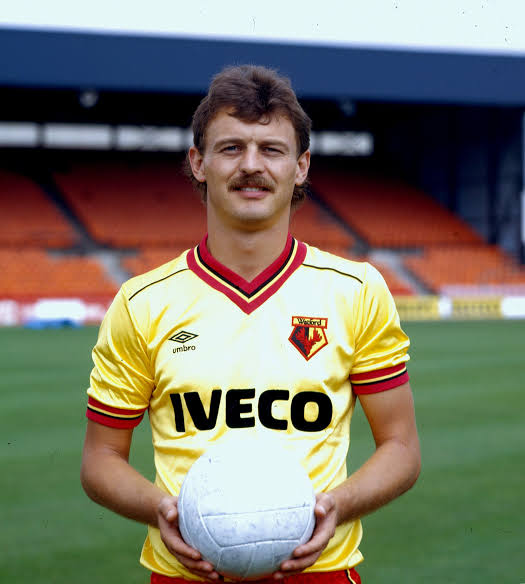
“As I say, the seven or eight years, we not only got there with the players, but we got there with the staff, we got there with the rest of the football club.”
It was not simply a succession of increasingly expensive teams being assembled to meet each new challenge. A core group grew with the club. Bolton was part of that core.
Taylor knew exactly what he wanted from his players and, crucially, appeared convinced that those same principles could continue working as Watford moved through the divisions.
“He picked a team, let’s call it a car, with all the engine and all the various parts that knew how to play his way.”
The system ran throughout the club. “Every single team — the youth team, the reserve team — they all played the same way.”
That consistency gave players such as Bolton the opportunity to move upwards with Watford rather than being discarded every time the club reached another level.
The opposition changed. The demands increased. The basic identity remained.
It is easy with hindsight to see Watford’s rise as an inevitable sequence: Fourth Division, Third Division, Second Division, First Division. Living through it was different.
These were players beginning in English football’s bottom tier and eventually finding themselves competing with Liverpool, Arsenal and the established elite.
Taylor understood that Watford could not simply compete financially with those clubs.
“He knew we couldn’t compete with your Arsenals, your Liverpool's, all those that have got money.”
So, Watford found another way.
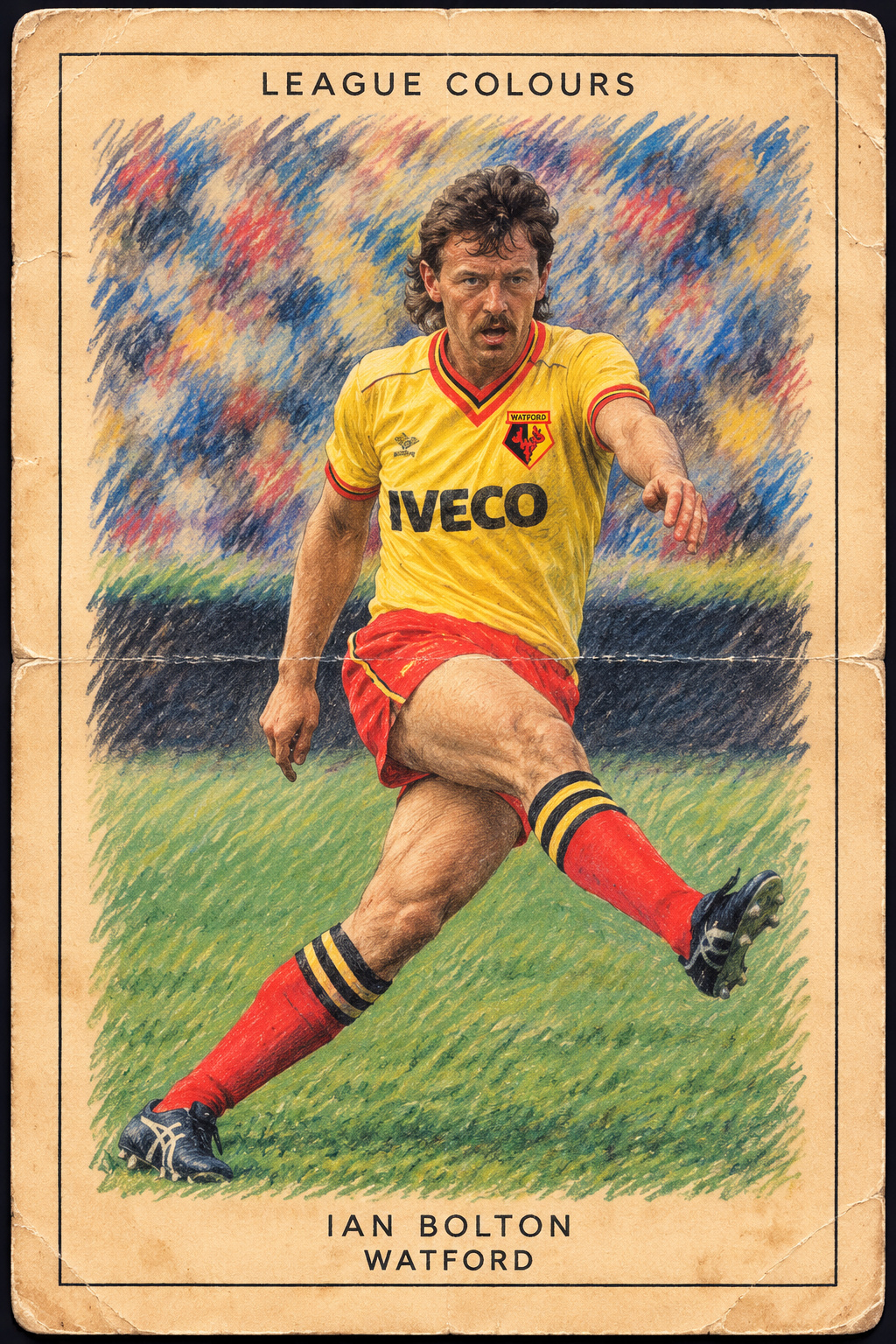
The result was a team whose rise has become central to the identity of the football club, but Bolton’s place within it gives him a particularly unusual perspective. He did not arrive once the adventure was underway or join for the glamorous part at the end. He experienced the transformation from near enough the beginning.
And perhaps that is why his memories are as much about people as results.
Taylor features constantly. So do the staff, supporters and town itself. Bolton describes a football club travelling together rather than simply a successful first team.
“He not only took the players, himself, the staff and the football fans of Watford,” Bolton said of Taylor, “he took the town and everything with him on this journey.”
Carl, reflecting on Bolton’s continued relationship with the club and its supporters, told him: “You saw the love at the Red Lion. You are very much not just liked but loved around this town.”
Bolton’s response was typically self-deprecating. He wondered aloud whether supporters at Brentford, where he later played, might say the same.
“They’ve probably got me on a dartboard.”
But Watford is different.
Bolton eventually left for Brentford, a move he would later describe as “career-wise, the worst decision I ever made.” Only after leaving did, he realises quite how much playing for Taylor — and playing for Watford — had meant to him.
“I’d have run through a brick wall for Graham Taylor,” he said, “but I didn’t know that until I went to Brentford.”
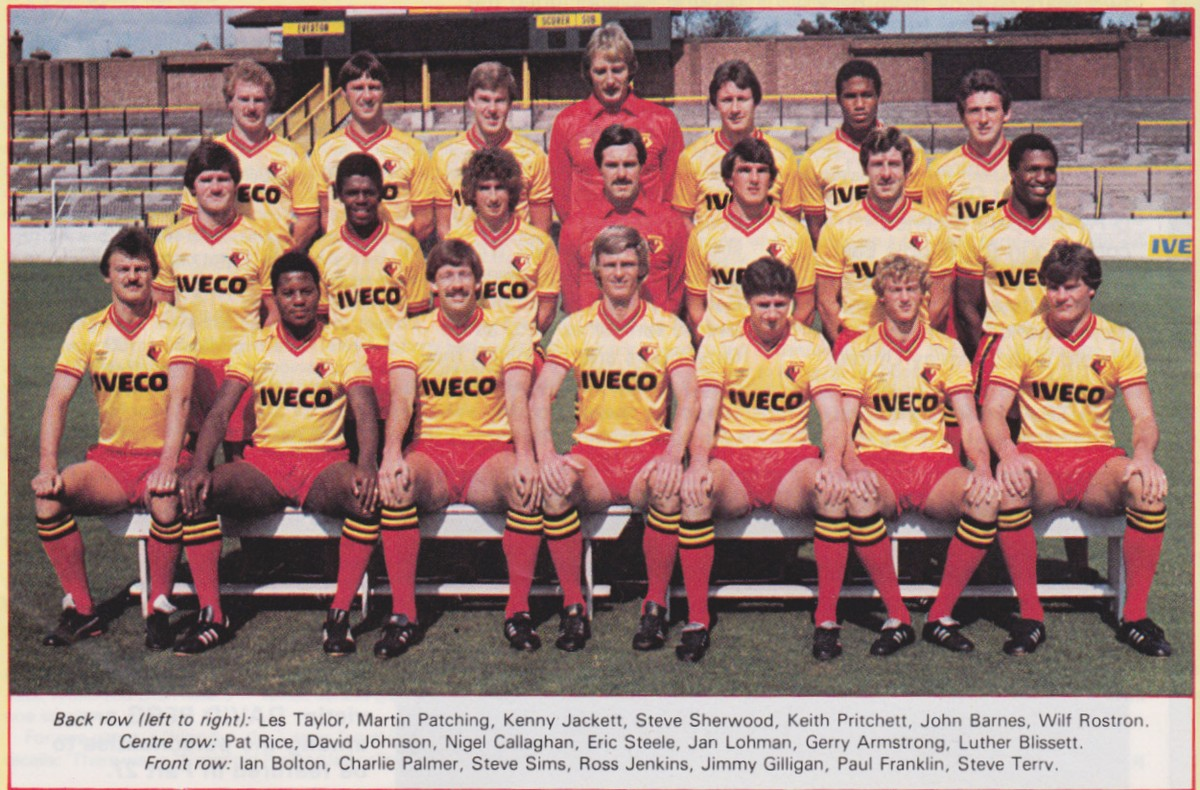
There may be no better description of what that Watford side became.
A group of players who bought into a manager, a method and a football club so completely that they kept climbing until the Fourth Division side Bolton joined in 1977 had become runners-up in the First Division.
Decades later, the statistics provide the historical record.
Four divisions. Five extraordinary years of ascent. Second place in the topflight.
But Bolton’s memories supply something more valuable: what it actually felt like to be inside it.
“The time,” he says, “was just unbelievable.”
For Ian Bolton, and for Watford Football Club, it really was.
There is a particular familiarity about conversations between Watford and Norwich supporters. Both clubs have enjoyed spells in the Premier League, both have spent time trying to rediscover what made them successful, and both have discovered that assembling a squad of talented individuals is not necessarily the same as building a football team. Ahead of Watford’s visit to Carrow Road, Peter welcomed Adam from The Pink ’Un for an Opposition View that began with Norwich’s recent troubles and ended, inevitably, with Teemu Pukki and a reminder of what supporters really cherish.
There is a particular familiarity about conversations between Watford and Norwich supporters. Both clubs have enjoyed spells in the Premier League, both have spent time trying to rediscover what made them successful, and both have discovered that assembling a squad of talented individuals is not necessarily the same as building a football team. Ahead of Watford’s visit to Carrow Road, Peter welcomed Adam from The Pink ’Un for an Opposition View that began with Norwich’s recent troubles and ended, inevitably, with Teemu Pukki and a reminder of what supporters really cherish.
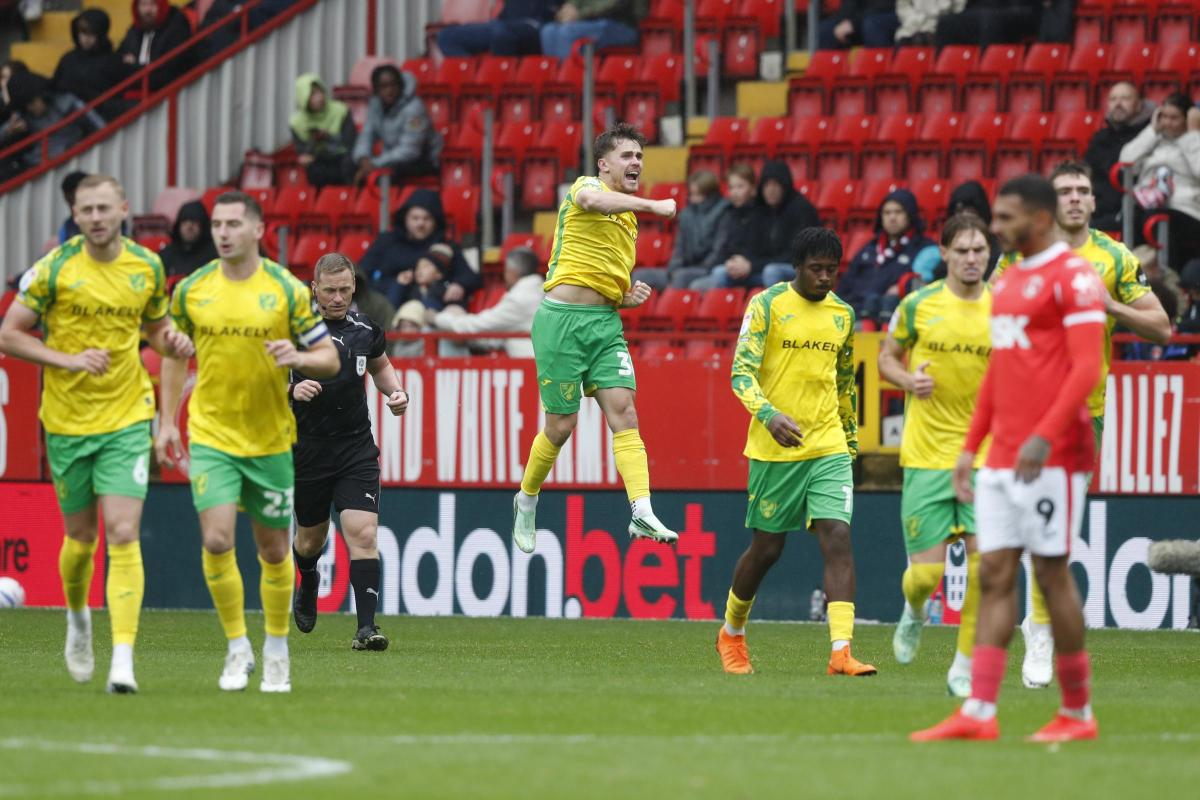
Adam arrived in rather better spirits than he might have done a few days earlier. Norwich had just beaten Charlton, ending a winless run that had threatened to derail their season. “A good win for us on Saturday, so certainly the mood if you'd have spoken to me on Friday would be very different to it is now.” It was welcome relief for a club that had entered the campaign expecting rather more than a struggle to find consistency.
From Renewal to Frustration
The optimism had been understandable. When Philippe Clement took over from Liam Manning last season, Norwich were languishing near the bottom of the Championship and the football had become deeply dispiriting. Adam was unequivocal about the previous regime: “That was, the most dire football I think I've seen throughout my Norwich City lifetime supporting the football club.” Clement’s arrival initially produced modest signs of improvement, but his pedigree at Monaco, Rangers and Bruges suggested that he understood how to rebuild a struggling side. The transformation eventually became striking. Adam remembered: “The atmosphere lifted. Everything just felt almost back to the Daniel Farke days which, is a long time ago now because we've had some very difficult spells in between then.”
“For the first time in probably the five years since the relegation really from the Premier League, Norwich fans felt like they wanted to go to Carrow to see the team again.”
That enthusiasm, Adam explained, recalled the atmosphere during Daniel Farke’s successful years. Norwich kept much of their first-choice side over the summer and supplemented it with new signings. There was every reason to anticipate a challenge towards the upper reaches of the Championship rather than another season of anxiety.
Instead, the early weeks were characterised by defensive chaos. Norwich were scoring, but conceding even more readily, frequently losing by a single goal after handing opponents too many opportunities. “Certainly in the early games this season we were conceding goals at an absolutely stupid rate.” Individual errors contributed, but Adam also identified structural problems, especially in the wide areas. The result was a growing sense that the club’s recruitment had not produced a balanced side. “We've given up far too many chances and seemingly been punished for all of them.”
The criticism has largely bypassed Clement himself. Unlike some clubs that might regard a difficult autumn as an invitation to change managers, Norwich supporters have continued to back the man who revived their fortunes. “Philippe Clement has not got any criticism whatsoever from our fan base.” Adam acknowledged that the manager had made mistakes, but his achievements last season had earned him patience. Much of the dissatisfaction instead has been directed towards sporting director Ben Knapper, the players and those above them.
A Different Kind of Ownership
The discussion moved naturally towards Norwich’s changing relationship with their owners. Peter described Norwich as something of a footballing sibling to Watford, similar in scale and traditionally rooted in a family-club identity. For years, Delia Smith and Michael Wynn Jones embodied that connection, even when supporters questioned their financial resources or football decisions. Adam recalled their willingness to communicate and accept criticism: “They had the fans' views and kind of the love of the club at the heart of everything.”
The transition to American ownership has altered that relationship. The new investors also own baseball’s Milwaukee Brewers, and Adam suggested Norwich supporters sometimes feel like the less favoured part of the sporting family. “We've not heard our owner now for, for almost a year.”
For a fanbase accustomed to accessible custodians, the silence feels particularly uncomfortable when performances deteriorate. Adam linked that distance to the anger expressed following the defeat to Portsmouth, although he was careful to distinguish criticism of the hierarchy from the continued backing for Clement.
The contrast was especially resonant for Watford listeners, who have spent plenty of time debating the accessibility of their own ownership. Neither club’s difficulties can be explained by a single transfer or tactical decision. The larger question is how a football club maintains trust when supporters feel increasingly removed from the people making the decisions.
Andre Brooks and the Problem of Balance
Peter was particularly interested in Norwich’s capture of Andre Brooks from Sheffield United, a player he had previously expected to progress towards the Premier League. Adam agreed that the signing initially looked a statement of intent, not least because it emerged with unusual secrecy. “I got the news sort of 30 minutes before he was signing, which is pretty unheard of in, in today's world.” Norwich had taken a highly regarded young player from a direct Championship rival to address a long-standing weakness on the right of their attack.
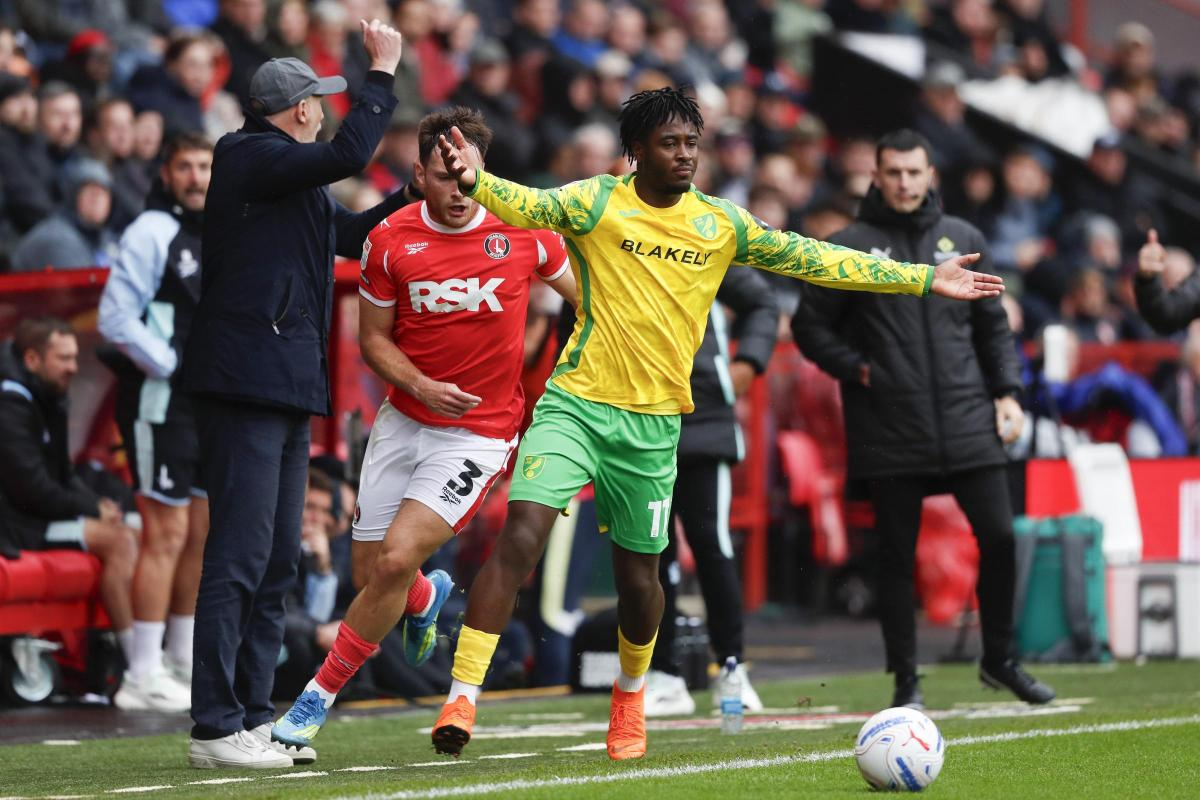
Brooks started brightly, scoring twice on his Carabao Cup debut against MK Dons and contributing in the early league fixtures. But the form has since faded. “He's been pretty anonymous to be quite honest.” Adam explained that Clement had challenged the winger to contribute more defensively, particularly because Norwich’s full-backs had been left exposed by wide players failing to track runners. It raised an intriguing coaching question: how much should a manager compromise a creative player’s natural strengths to make the collective system function?
Peter recalled a conversation from a coaching symposium in 1996 with John Cartwright, the former Arsenal assistant, about the original Ronaldo. Cartwright’s argument was that British coaches would have tried to make the Brazilian superstar defend rather than concentrating on the devastating qualities that made him exceptional. Peter wondered whether football sometimes spends too much time making players adequate at their weaknesses instead of exceptional at their strengths. Adam did not write Brooks off, stressing his youth and the quality evident earlier in the season. “He's not the finished article at this point. Norwich paid good money for him and we've seen enough evidence I think in the early games to believe there's a real talent there.”
Sam Field provided a different illustration of the same recruitment puzzle. Norwich initially borrowed the experienced midfielder from QPR when Pelle Mattsson was injured, and Adam felt the loan had made perfect sense. “He'd just done the dirty work. He'd done everything you wanted from a good solid championship midfielder.” A permanent deal, reportedly costing £1.8 million, looked sensible cover for a demanding season.
Yet Field’s permanent spell has proved less convincing. Injuries to Kenny McLean and Mattsson have disrupted the midfield, but Adam also felt the combinations had not worked. Some fans were already questioning the fee and even suggesting another move for Field. He regarded that reaction as harsh, but symptomatic of wider frustration with recruitment. “He signed individual talents that on paper can do something magical, but collectively maybe don't quite work.” It was a description that Peter suspected would have Watford supporters nodding so vigorously they might require medical attention.
Goals, Injuries and a Striker’s Job
Norwich’s attack has also undergone an awkward transition since Josh Sargent’s departure. Adam described the American’s exit as damaging to his standing with supporters, but said Mohamed Touré had quickly helped everyone move on. Signed from Randers for a reported £2.8 million, Touré finished last season strongly and began the current campaign with five goals. “When you get him facing the goal, he just buries everything.” His all-round play still needs refinement, but his instinct in front of goal made him a considerable threat.
Unfortunately for Norwich, Touré has suffered a shoulder injury requiring surgery and is expected to be unavailable until January.
His absence comes just as the team has tightened defensively but lost some of its early attacking fluency.
Adam also reflected on the striker’s journey from a refugee background to representing Australia on the international stage, a remarkable personal story alongside his footballing development.
That leaves Mathias Kvistgaarden and Jovon Makama with greater responsibility. Kvistgaarden, signed from Brøndby for around £7 million, initially struggled to fit Clement’s preferred 4-2-3-1. Adam likened him to Pukki: a smaller forward who thrives on movement behind defenders rather than acting as a physical focal point. “I think if you'd have put him in a Norwich City system under Daniel Farke, I think he would've absolutely thrived.” This season, though, he has added physicality and begun to contribute more consistently.
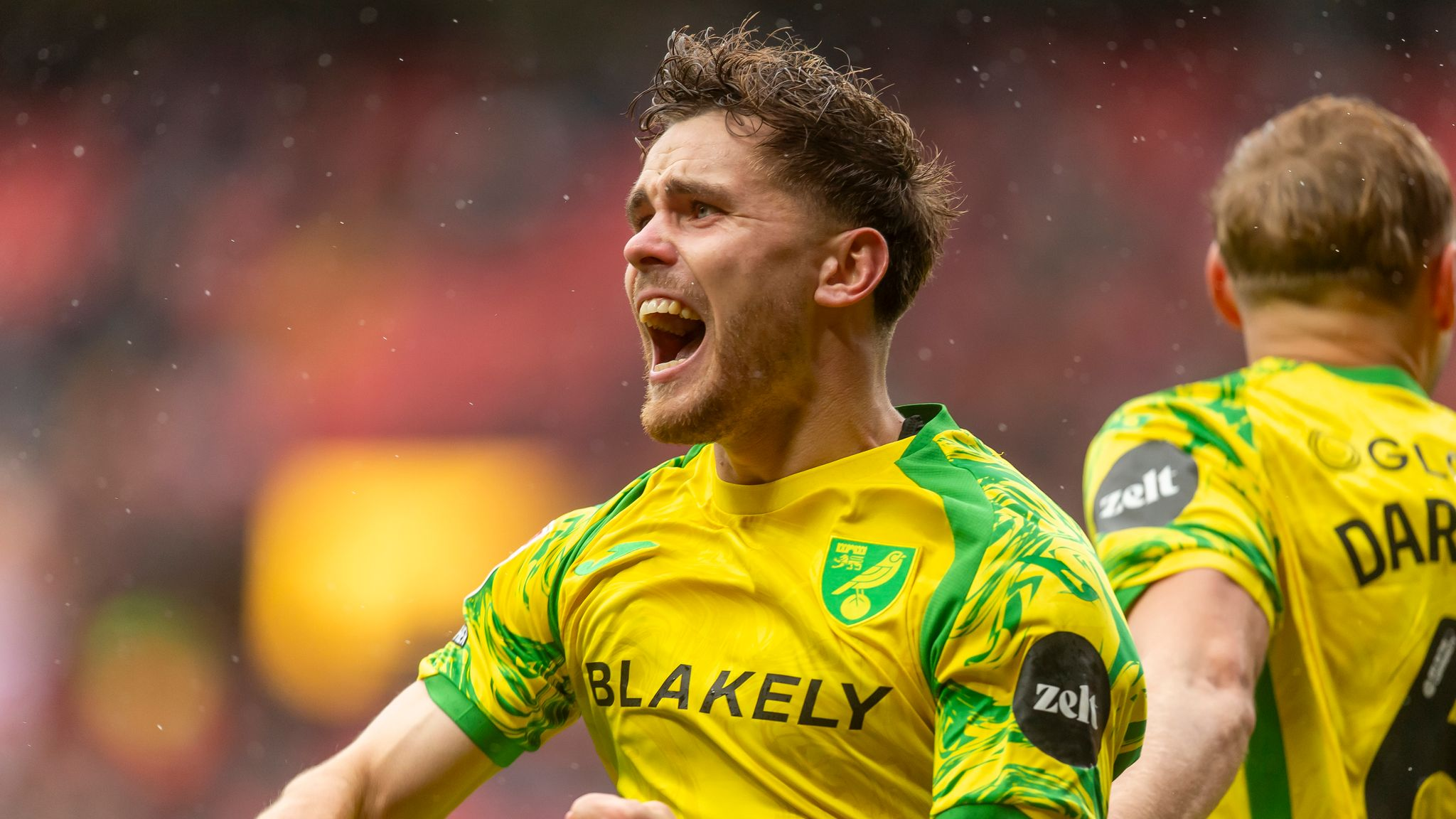
Makama offers the contrasting option. The former Lincoln striker impressed after arriving last season but has endured a succession of injuries and is still working towards full fitness. Adam described him as a powerful presence capable of unsettling Championship defenders when fit. “When he's at his best, he can be quite unplayable.” He even suggested that Watford might be the unfortunate opponents to witness his return to form. Peter, understandably, was less enthusiastic about that possibility.
The Man Who Made Norwich Dream
The conversation ended with the retirement announcement of Teemu Pukki, prompting a diversion through a much-loved radio exchange about Finnish goalkeeper Antti Niemi before returning to the Norwich legend. Adam’s admiration was unmistakable. “Probably the best free transfer in our club's history. Still crazy that we didn't pay a single penny for his for his signature.” Pukki arrived after an unremarkable spell at Celtic and mixed experiences elsewhere in Europe, yet became one of Norwich’s most important modern players.
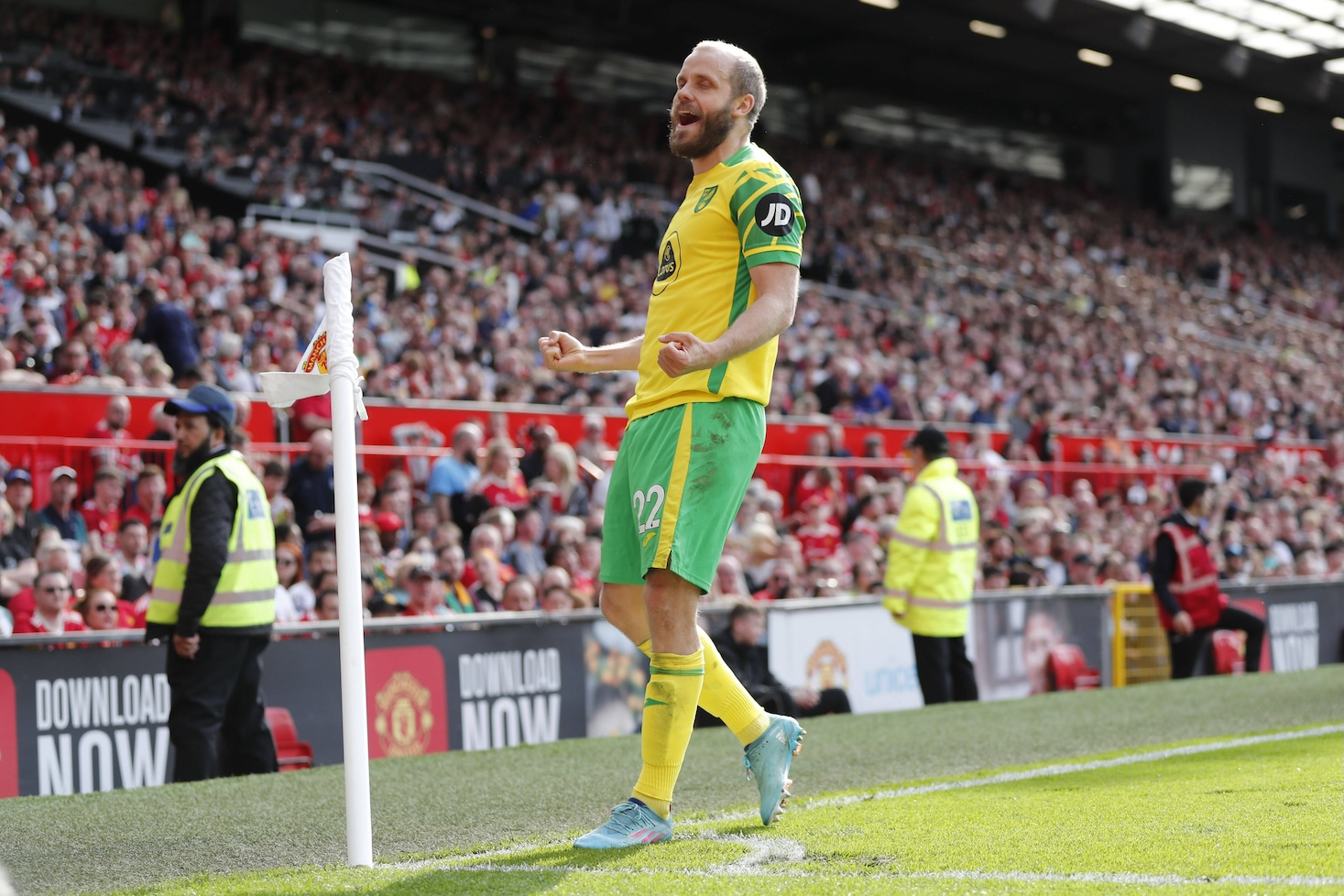
Adam remembered the partnership with Emi Buendía, the Championship titles, the famous victory over Manchester City and the goals that twice helped Norwich reach the Premier League. Pukki’s intelligence and finishing flourished in Farke’s system, making him a symbol of a period when recruitment, coaching and collective identity aligned. “He just took to championship football like a duck to water.” The affection was clearly mutual, with Adam recalling the emotion of Pukki’s farewell at Carrow Road and his continuing attachment to the club.
Whether Norwich eventually honour him with a statue, a coaching role or simply a warm welcome back remains to be seen.
“He'd be welcome back in any sort of format, whether that be coaching whatever role he wants.”
For Adam, Pukki represents more than an impressive goals tally: he recalls a time when supporters knew what their team was trying to achieve and took pleasure in watching it happen.
That is perhaps the thread connecting the entire discussion. Norwich have invested in individuals, retained a manager supporters believe in and shown flashes of attacking quality, yet still struggle to reproduce the cohesion that once made them so effective. Their win over Charlton may prove the beginning of a recovery, or merely a brief interruption to a difficult season. Watford arrive with problems of their own, and supporters of both clubs will recognise much of the frustration. Peter closed with a cheeky message to the departed Sargent: “Josh Sargent, here's what you could have won.” For Norwich, the challenge now is to make the present worth celebrating again.
There are so many managers from the Pozzo era that reducing them to ten might be the most demanding selection decision anyone at Watford has made in years. Justin, however, had managed it. His latest DNSYE blind ranking would reveal ten names, one at a time, with Pete and Carl required to place each from first to tenth. Once a position was taken, it was gone. The challenge was as much about anticipating Justin’s next choice as remembering what each manager had actually done.
There are so many managers from the Pozzo era that reducing them to ten might be the most demanding selection decision anyone at Watford has made in years. Justin, however, had managed it. His latest DNSYE blind ranking would reveal ten names, one at a time, with Pete and Carl required to place each from first to tenth. Once a position was taken, it was gone. The challenge was as much about anticipating Justin’s next choice as remembering what each manager had actually done.
As ever, the administrative arrangements inspired immediate confidence. Pete offered to maintain the rankings in a spreadsheet, prompting Justin to observe, “You and spreadsheets are a match made in heaven.” A reasonable precaution: before long, the numbers would become almost as contentious as the managers.
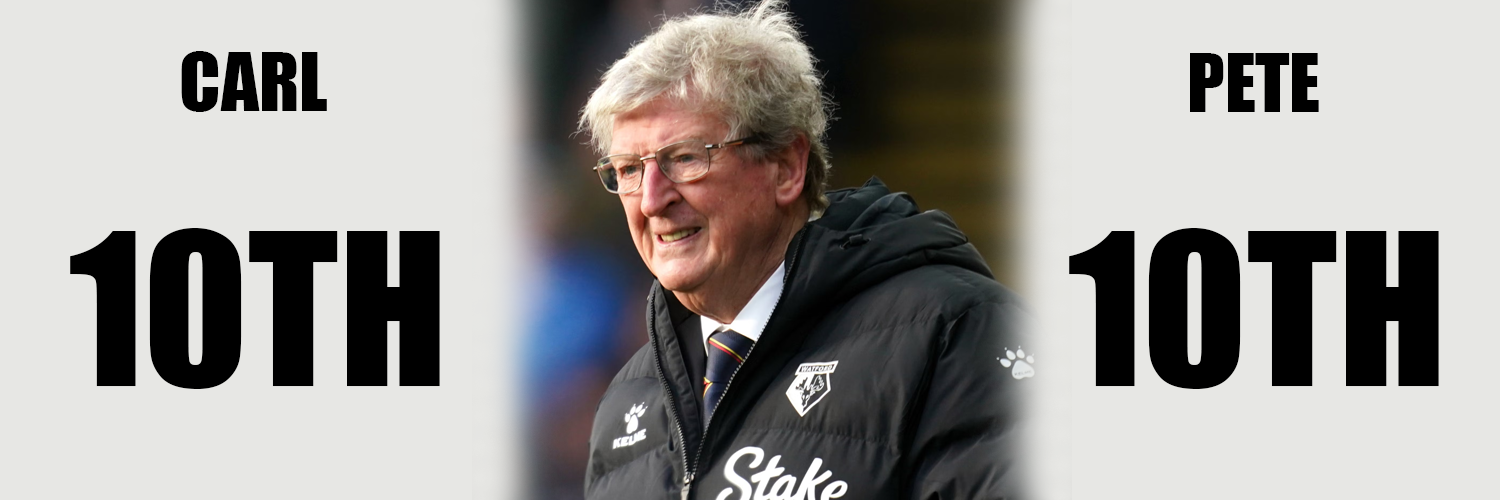
The first reveal was Roy Hodgson. Carl immediately requested twelfth place, an option Justin declined to introduce. Both settled on tenth, leaving nowhere beneath Hodgson for any late surprises. There was at least the comfort of agreement. Pete’s explanation was economical: “Number 10 just didn’t do it for us.”
Walter Mazzarri arrived next and the two lists immediately diverged. Carl chose eighth, acknowledging the win at Arsenal and Premier League survival. Pete put him sixth, despite an assessment that could hardly be mistaken for a glowing reference: “He was rubbish. He was dull. Nobody wanted him here.” Survival at the top level still counted for something, even if the entertainment had been rather harder to locate.
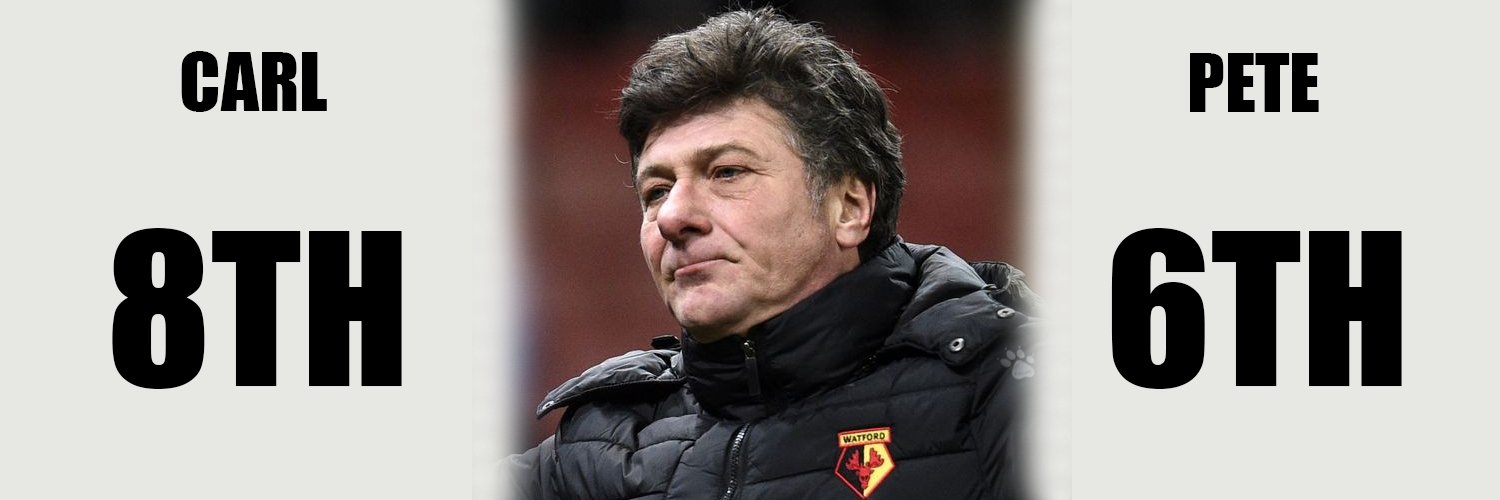
Pete still recognised the practical achievement behind that verdict: “He was only happier ever than Ivic, but he did it in the Premier League. Fundamentally, he kept us in there, so sixth place.”
Slaviša Jokanović prompted more considered choices. Carl went fourth, Pete third. For Pete, the debate concerned how much credit the head coach deserved for promotion. He pointed to Troy Deeney’s account of the players’ contribution and the roles of other figures around the squad. It was an early reminder that this was not simply a ranking of results, but of how each man fitted into Watford’s story.
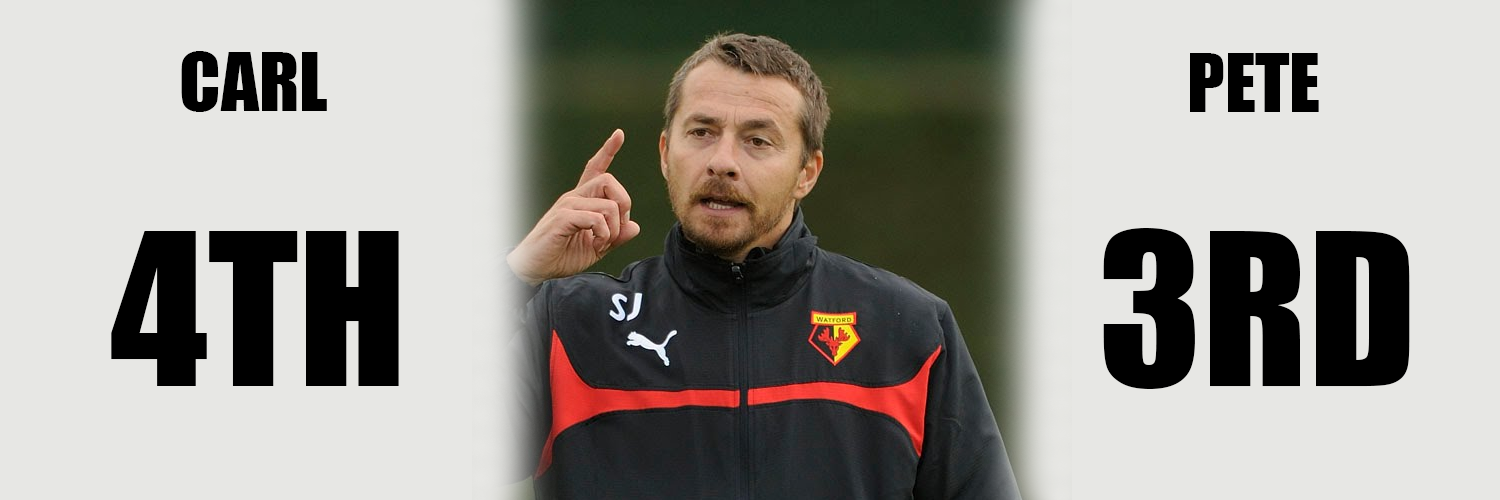
Pete explained his Jokanović judgement in terms of the people around him: “I’m going with it because Troy Deeney said he didn’t do it. It was the players. He mentioned also Keith Andrews. He also mentioned Dean Austin.”
Then Justin produced Ed Still. Carl’s first response was “That’s just cruel, nasty.” His instinct was eighth, before Pete reminded him that Mazzarri already occupied it. More persuasion followed, with Pete arguing that Still could hardly be placed above a manager who had worked at Napoli and Inter Milan. Carl reluctantly moved him to ninth, joining Pete, who now regretted having given Hodgson tenth so hastily. “I’ve been pressured into that.” Carl complained. Pete was unsympathetic.
Carl, meanwhile, was careful not to lay every problem at Still’s door: “And the reason I put him in eighth is because he was well out of his depth and should never have been given the job. And I don’t necessarily blame him for that.”
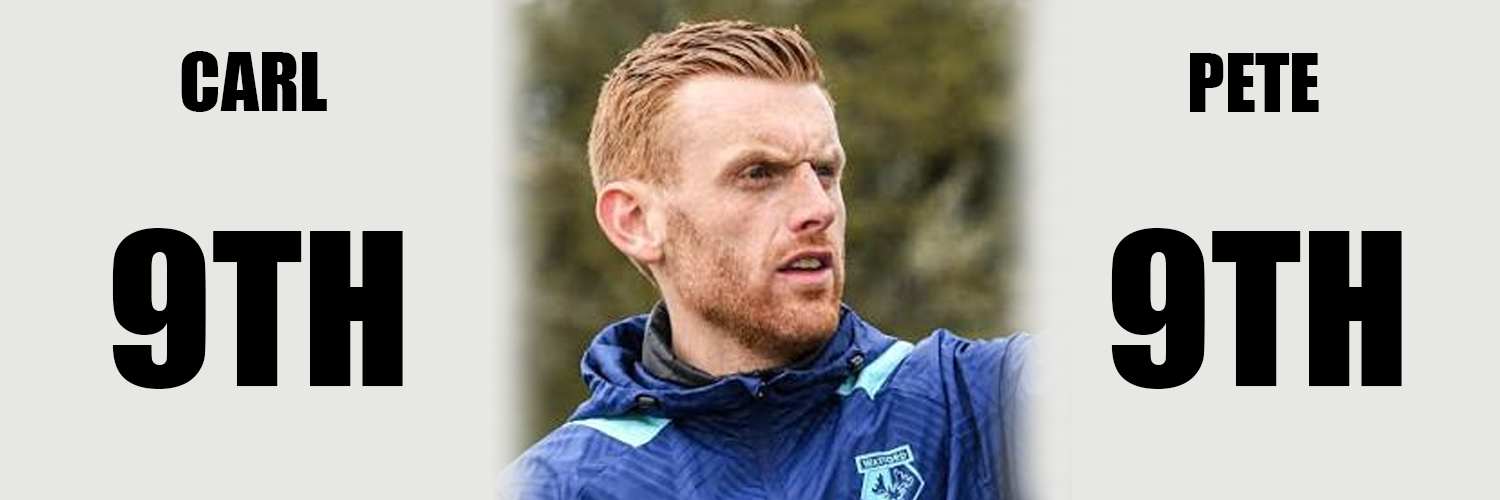
Quique Sánchez Flores divided them again, although both placed him relatively high: third for Carl and fourth for Pete. The first spell, Premier League survival and the FA Cup semi-final all counted in his favour. His return did not. Pete felt the second appointment inevitably reduced his standing, particularly when measured against those who had achieved more in a single visit.
On Sánchez Flores, Pete’s deliberation was quite explicit: “I’m going to go four. I’m going to go for because of that second tenure. The first was okay.”
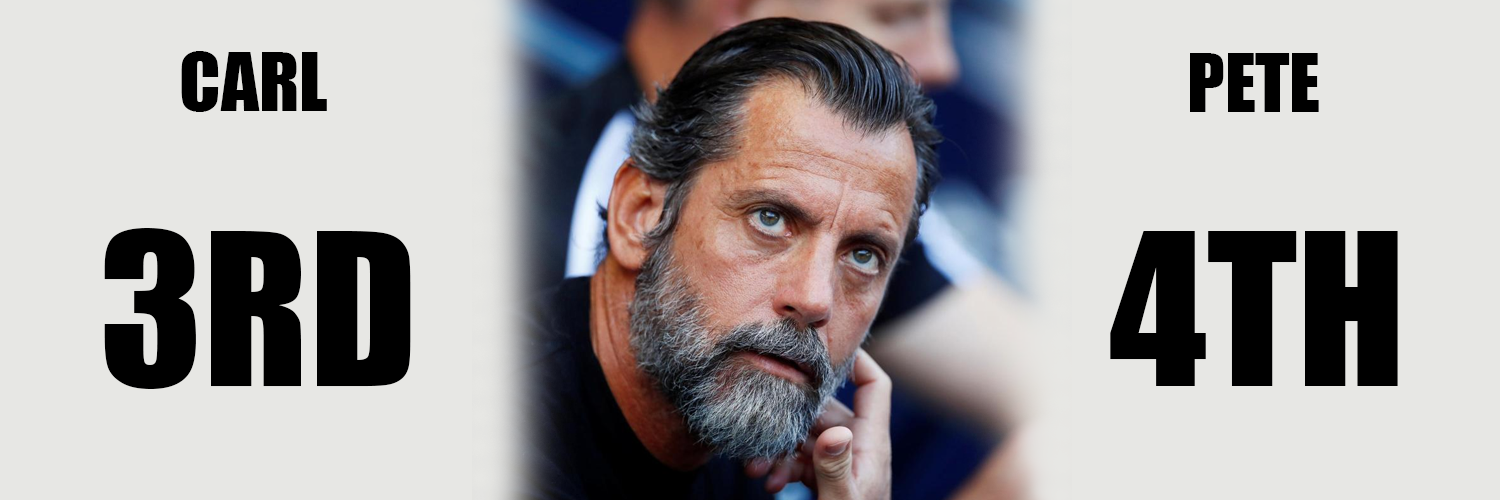
Tom Cleverley was fifth for Pete and sixth for Carl. Pete’s view was coloured by the patience Cleverley had subsequently been afforded at Plymouth, a contrast he could not resist pointing out. “You know, a club stuck with the manager. Yes, do not adjust your headset.” The line earned its laugh because patience is not generally the first quality associated with Watford’s managerial history.
The significance of the younger manager’s future was part of Pete’s assessment: “I’m going to go five. And more than any reason, because he was young.”
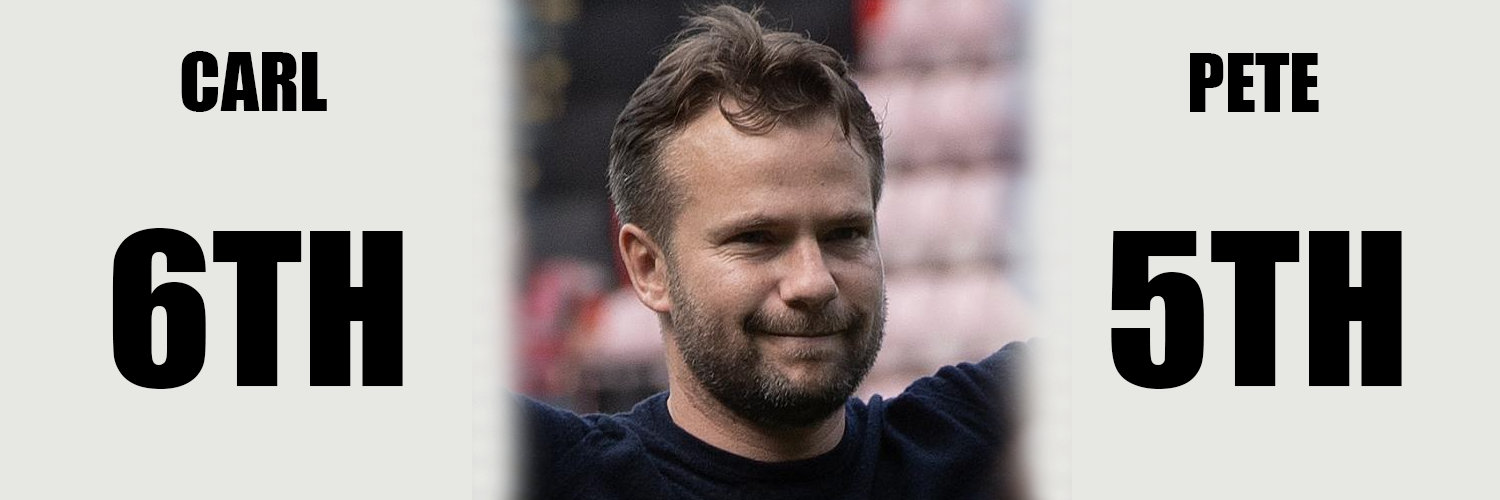
Claudio Ranieri was less a question of preference than of increasingly restricted space. Carl landed on seventh and remembered the extraordinary 5–2 victory at Everton. Pete assigned him eighth, partly because he could, and partly to put him below Carl’s estimate. Even at this stage, both still had to accommodate several names Justin was deliberately withholding. Pete confessed, “I’m putting Ranieri in at eighth simply so that I can basically kind of... “Have it large” over Carlos that I rated him lower.”
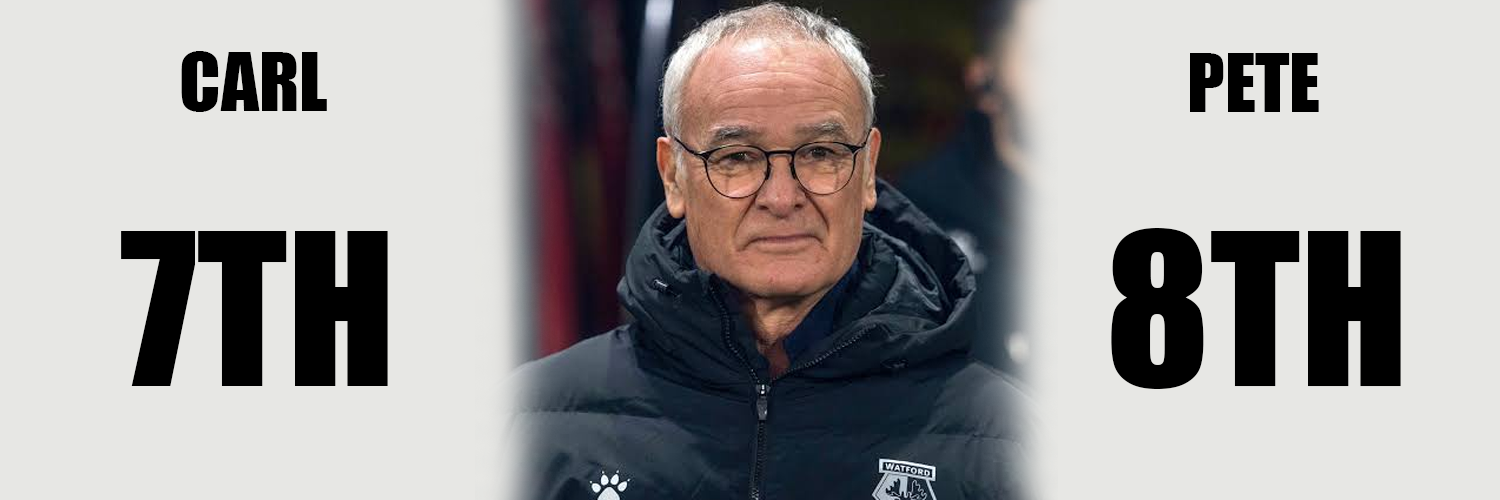
Marco Silva brought the strongest disagreement of the exercise. Carl recognised the quality of the football and the promise of that side, but could not look past the manner of Silva’s departure. “The football under him I thought was very good and there was so much potential there, but he was a snaky little bastard.” Fifth was his answer.
Pete put Silva second. He separated coaching ability from personal affection and argued that the manager’s relationship with the club had deteriorated amid disagreements over recruitment. “I thought as a coach, I don’t think we saw anybody better.”
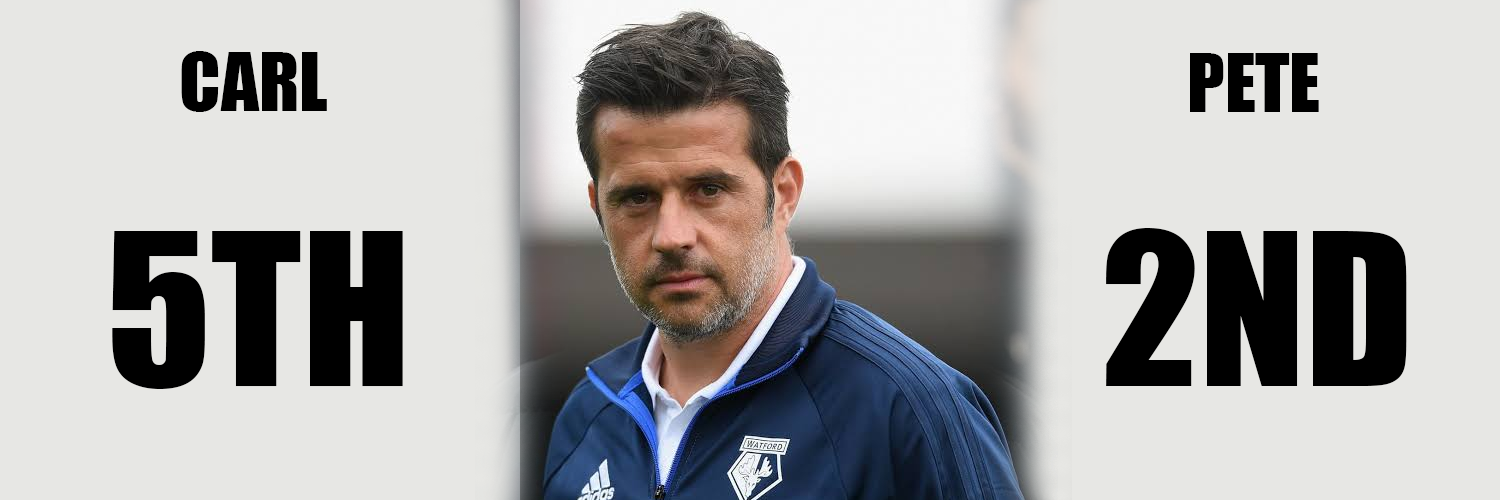
To Pete, the football merited a place near the top regardless of the Everton episode. It was the clearest example of two different criteria producing two very different rankings. Pete accepted the Everton interest was mutual: “Yes, absolutely. He had admiring glances from Everton and returned those admiring glances.”
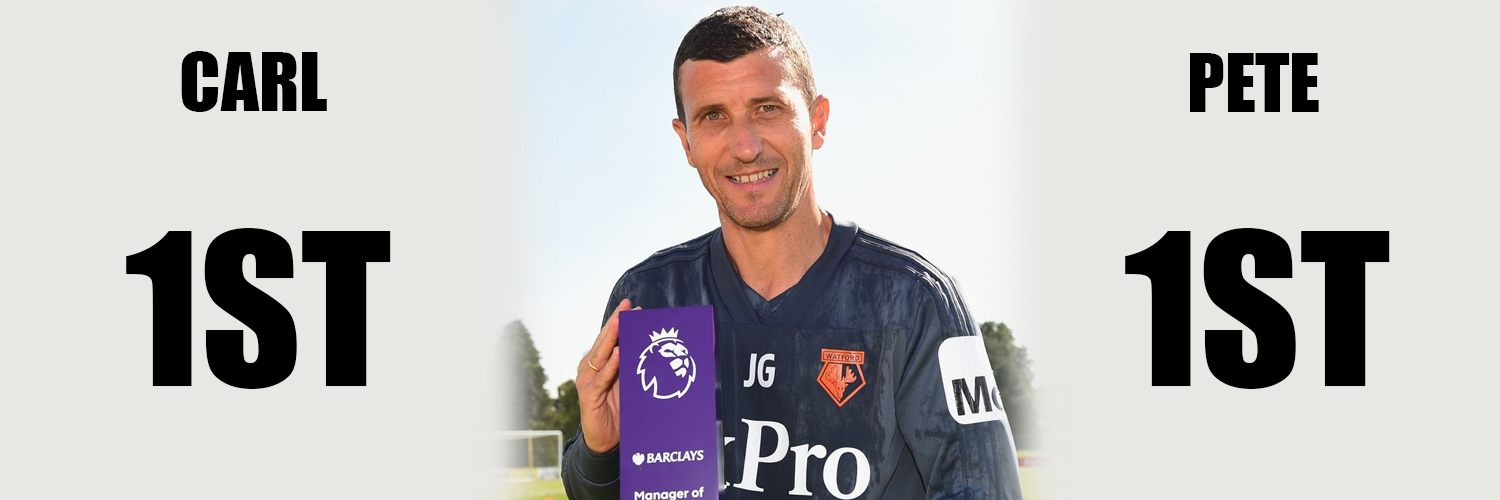
With two names still to come, Justin revealed Javi Gracia. Carl needed no deliberation: “Numero uno for me.” He cited the Premier League work, the FA Cup run and the affection he had for Gracia, while conceding that the second spell was rather less successful. Pete had only first and seventh available. There was, he felt, no conceivable case for seventh.
Carl’s justification for first place was direct: “Yeah, not the best coach, but just what he did for us in the Premier League.”
Pete also gave Gracia top spot, stressing the circumstances of his return and his departure. Whatever had gone wrong the second time, the first tenure had left a deeper mark than most of the era’s appointments. The rarest thing in a blind ranking had happened: agreement arrived without anyone needing to inspect the remaining spaces.
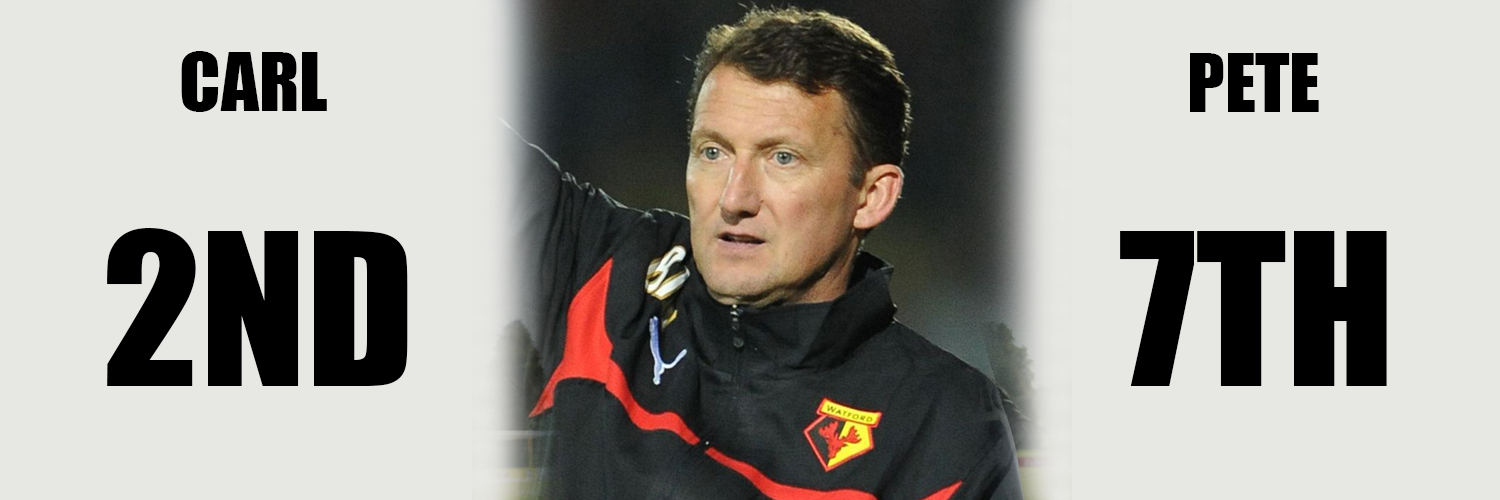
And then came Justin’s “Ace in the hole” Billy McKinlay a manager removed from his post after only two games! Carl had only second place remaining; Pete had seventh. Justin could scarcely have designed a better finale. “It’s worked. That’s brilliant.” Carl declared, apparently delighted that his improbable placing had not turned out quite as disastrously as it clearly had!
McKinlay’s time in charge had been exceptionally brief. Carl defended the ranking by appealing to what might have been, rather than what anyone had time to establish. Pete recalled the 1–1 draw against a Brighton side managed by Sami Hyypiä, followed by a victory over Brentford courtesy of a Matěj Vydra strike. Two points a game was a respectable return, if an exceedingly small sample. “Statistically not a bad choice,” Pete admitted, adding the qualification that the ranking scarcely needed.
Carl’s defence of his runner-up was almost an argument about possibility itself: “Correctly, because I think it was more about what he could have been than what he was. That’s why.”
Neither list was meant to be a considered, definitive history of the Pozzo era. That is precisely why we find them entertaining.
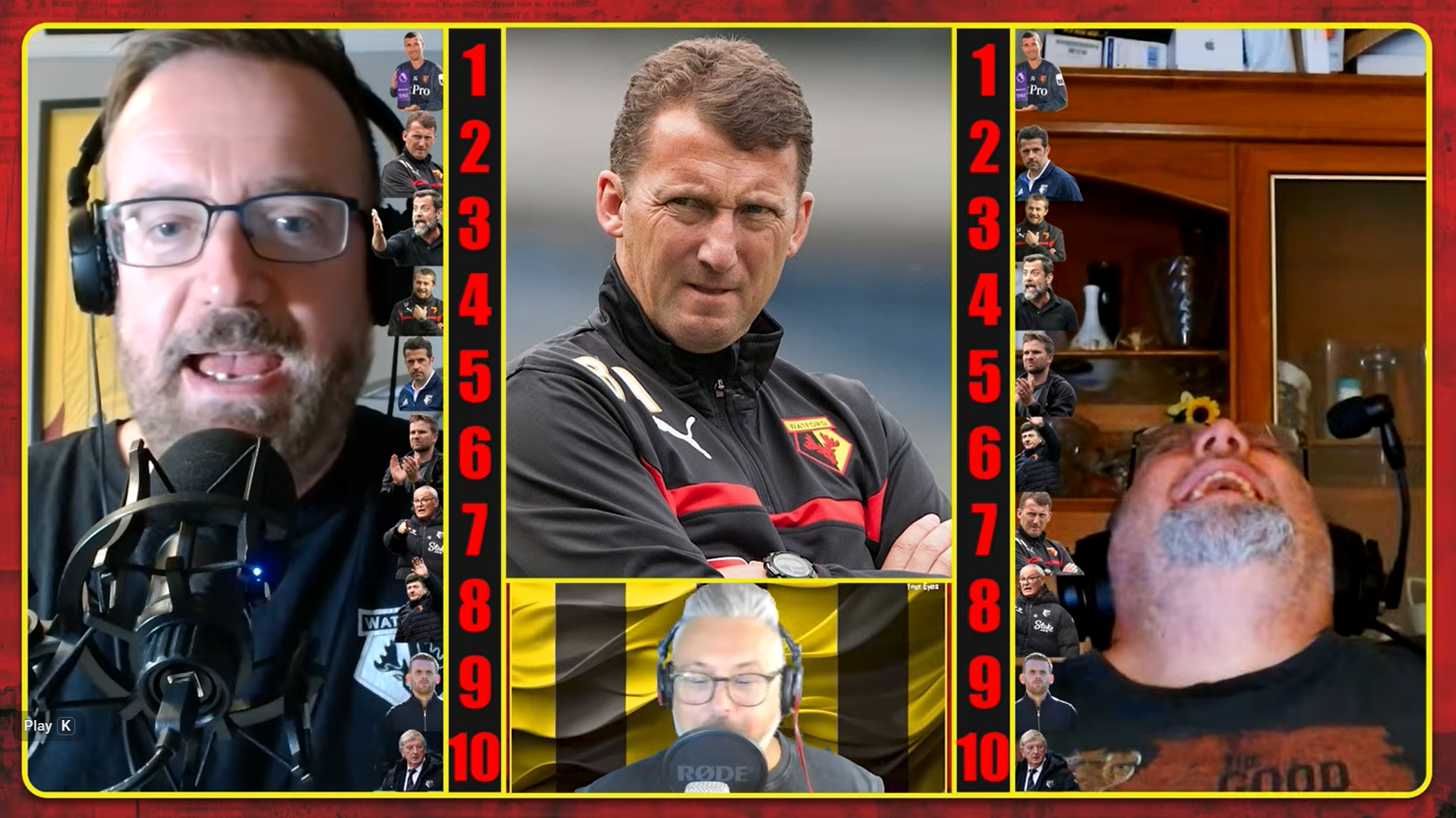
The exercise revealed the traps in judging managers at Watford. Do you reward survival, style, promotion, cup runs, personal connection or simply the prospect of what might have happened with more time? Once the choices are made blind, the answers become wonderfully inconsistent. Both agreed on Gracia at the top and Hodgson at the bottom. Everything in between was open to argument — especially Billy McKinlay, whose two-match tenure somehow became Carl’s second-greatest managerial achievement of the era.